My columns from The Georgia Mountaineer Quarterly
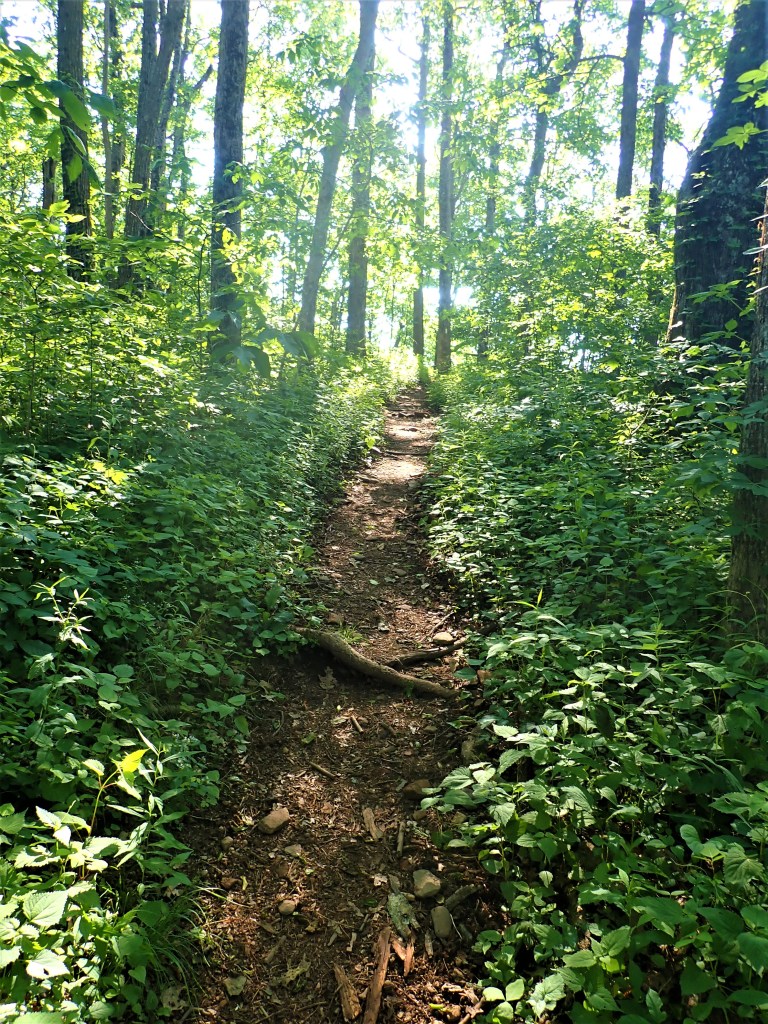
Summer backpack hiking the Georgia section of the Appalachian Trail is a challenge with a less than stellar reputation. The north Georgia heat and humidity, the bugs, the summer thunderstorms, and the sweaty work of climbing one mountain peak after another can take a heavy toll on any hiker. Then there is the abundant poison ivy to avoid, the spider webs across the trail in the mornings and, for those who are creeped out by these sorts of things, the chance of encountering a snake or two.
The load of discomfort, real and imagined, can be so heavy that some veteran hikers just skip the entire summer season and wait for the cooler climate of fall, or they head for other trails in other places, maybe out west in the Rockies or even some other continent where the hiking is exotic and “fun.” The backpacker novices hear about the heat and the bugs and all the rest of it and decide going to the beach or just staying home inside with the air conditioning sounds like the better option.
That’s too bad because our north Georgia A.T. miles can be wonderful in the summer. The glory of the Chattahoochee National Forest comes alive in every shade of green, summer flowers like fire pink and rhododendron dot the trail in unexpected places, and the cold water of the springs and creeks are a welcome and refreshing sight. If solitude and a silent forest is what you seek, a real “fellowship with the wilderness” experience, summer miles on the Georgia A.T. will often deliver. The trail can be downright lonesome in places. The thru-hiker bubble is long gone, the winter and early spring starters are far to the north, maybe even halfway to Katahdin. Yes, there are some weekenders and dayhikers on the Georgia trail, and even a few late-starters hoping to go all the way, but the shelters are no longer jammed shoulder-to-shoulder and you can pitch a tent pretty much wherever you want at the campsites.
There is one exception on the trail that is rarely lonely in any season – Springer Mountain. I arrived at the summit mid-afternoon on a toasty Memorial Day after the long uphill grind from Amicalola Falls State Park and had the place to myself – for about ten minutes. I was the eighteenth person to sign the register that day. The day before 29 hikers had signed the notebook that the Georgia Appalachian Trail Club keeps in the metal tray inset into a rock where the famous southern terminus plaque marks either the beginning or the end of the trail. The day before that 37 people had signed it. And before I had rested a bit and finished eating a snack, a young family of four arrived from one direction, a northbound backpacker from Germany arrived from the other, there were pictures to take beside the plaque and questions and conversations and then more hikers arriving from both directions.
But once past the Springer parking lot and heading north toward Stover Creek, the trail was empty. The next day I had long hours of silence except for the birds chattering away, and then the gentle roar of Long Creek Falls – a must-visit sight that unfortunately some thru-hikers pass up in their haste to put miles behind them. I spent half an hour there alone, enjoying the sound of the water and the low morning sunbeams slanting through the trees.
For an unprepared hiker new to Georgia’s A.T., the stretch of trail from the waterfall and the nearby Benton MacKaye trail junction north to Woody Gap can be an eye-opening surprise in any season. A profile map hides the difficulty of the long, gradual climb up to Hickory Flats and then Hawk Mountain. Then comes the truly tough part – a series of short, steep climbs where Georgia begins to earn its reputation for puds – pointless-ups-and-downs. Waiting for hikers in that stretch of trail is Sassafras Mountain, the first climb worthy of the name in the broader scale of the 2,194-mile A.T. Climb Sassafras on a warm day and your legs will know you have put in a hard day of trail work. Arriving at Justus Creek after tromping over that dry six-mile section of trail in the heat of summer is a little like coming upon an ice chest of cold beverages after marching with Marine Corps recruits for a couple of hours.
At Gooch Shelter I made two new friends, a retired fellow from the Atlanta suburbs and his grown daughter, a first-grade teacher, the two of them hiking Georgia together and learning not to underestimate the difficulty of the Appalachian Trail’s first miles toward Katahdin. “It’s a lot harder than I remember,” the dad said to his daughter as he hauled off his backpack at the shelter. Fifteen years had passed since he last backpacked the Georgia A.T. I commiserated with him about that – advancing age has a tendency to fool you into thinking you can still crank off mile after sweaty mile in these mountains day after day without paying a price for what you are doing to your body. Summertime miles seem to grow longer and harder with each passing year.
Woods Hole is one of my favorite shelters on the Georgia section of the A.T. The setting on the shoulder of a knob near Bird Gap is lovely in a shaded grove of hardwoods and the evening sunset beams pour through the tree canopy with golden light. Some backpackers I have talked to don’t favor Woods Hole because it is almost half a mile off the A.T. but the connecting trail is not difficult and the water source is a nice spring that flows directly out of the mountain, clear and cold. On a pleasant evening I had the grove to myself. Surely, I thought, one or two hikers would come ambling off the trail before the sun went down, but no, the forest was silent and still and I drifted off to sleep in my tent in the last of the twilight. In the morning, a pair of doves calling to each other woke me up before first light.
I got an early start because the climb up and over Blood Mountain was the next task. Going up from Slaughter Gap was tedious work; going down toward Neel Gap was just plain old hard. And if I have to admit that any piece of the Georgia A.T. is ugly and unpleasant, it has to be the last few hundred yards down to U.S. 19, overgrown, sun-exposed and plagued by the noise of speeding traffic and the occasional ripping thunder of motorcycles howling over the gap.
Thru-hikers don’t seem to mind any of that, however. Their attention is fixed on the prospect of a pizza and a cold drink. Or maybe leaving the trail altogether and going home. When I arrived there, hot and annoyed from the onerous descent off Blood, I met a disconsolate young man under the oak tree beside Mountain Crossings, his backpack tossed beside the picnic table and his head in his hands. One of his knees was ruined, he said, and as if that wasn’t enough, he had twisted an ankle on his other leg coming down Blood Mountain. He was waiting on a shuttle and trying to decide what to do. He was only two days out from Springer Mountain and now… well, maybe a day or two of rest would improve his knee. If not… his voice trailed off and his head went back down in his hands.
Just two days, I thought… that’s pretty fast. Our Georgia trail should teach hikers to slow down, scale back the ambition a little, “to see what you see,” as you walk and to leave all the busyness and cares of life behind for a while. Those hikers who can do this have a better chance of enjoying the experience. And, like the poor fellow I left behind at Neel Gap, those who can’t sometimes walk themselves into trouble. In the summer, after the big spring rush of thru-hikers in a hurry to see their first state line is over, fewer of the hikers on the trail are pushing themselves on rigid schedules planned in detail to get them to Maine by a specific date.
“I’ll just see how far I can go,” a hiker from Kentucky told me when we both stopped for a break at Chattahoochee Gap. He had seen a bear meander across the trail ahead of him 30 minutes earlier and insisted on showing me the picture he had snapped – a blurry black blob mostly hidden by the thick vegetation.
“You’re lucky to have seen one,” I said.
“Really?” he said, puzzled at first. Then he smiled, as if something had just dawned on him. “Yeah, I guess you’re right. I was worried about bears. Maybe I shouldn’t worry so much.”
One of the wonderful characteristics of the Georgia A.T. is the variety contained in the nature of the trail itself. After the sharp climbs often come long sections of more gradual rise and fall on soft treadway through beautiful hardwood forests and the delight of deep shade and cooler breezes. The section from Low Gap Shelter to Chattahoochee Gap is not quite flat, but the gentle grade on the old Civilian Conservation Corps roadbed makes for fine hiking and delivers a sense that a hiker is getting somewhere at last.
And for variety, how about a boulder field? Just a little taste of what is to come much farther north for backpackers who make it that far, a stretch of trail that requires concentration and secure foot placement. North of Red Clay Gap the trail teaches new hikers to pay attention to what they are doing and reminds veteran hikers that the Appalachian Trail demands respect no matter how many times you have walked it.
At Tray Mountain Shelter I met two gentlemen headed for Maine, one who had traveled here all the way from North Dakota and the other fellow a Maine resident who was headed home the hard way. “I’m getting a late start,” the hiker from North Dakota said as he finished packing up and hefted his bulging backpack over his shoulder. “We’ll see how far I can go,” he said, sweat dripping off his forehead. “Who knows… maybe I’ll flip flop to Katahdin before it closes and come back south. The main thing for us is just to hike.” And off they went, two middle-aged men working against both the miles and the calendar to achieve their dream. But not too worried about how it would all turn out.
An appropriate attitude, I thought as I hiked the beautiful miles trail north from Tray, the most isolated section of the Georgia A.T., on a mild summer morning, sunbeams lighting the narrow treadway and birds chattering in the tree canopy. Summer hiking is best done slowly, so you can enjoy the forest and appreciate the solitude as the miles reel off. Plan and prepare of course, because plans and preparation always matter on the A.T., but so does flexibility, especially on a warm day. When ambitious expectations collide against trail reality, the trail always wins. That hiker I had met back at Neel Gap had learned that lesson the hard way. The hikers from North Dakota and Maine were absorbing the lesson with every mile and enjoying the experience.
Climbing Kelly Knob on a warm morning, an 830-foot straight and steep ascent that just goes on and on and on, will teach even strong hikers the virtue of patience and fortitude. I stopped halfway up to sit on a rock and enjoy a snack and drink half a liter of the water I had collected at Tray. A cooling breeze at the summit was my reward for the climb and cold water from the spring on the trail to Deep Gap Shelter was waiting for me on the other side of the knob. I drank another liter there and enjoyed a lazy half hour of rest, basking in the silence and deep shade of midday.
At Dicks Creek a father and his two teenage children from Alabama were waiting for his wife to come pick them up. They had hiked from Springer over six days, fabulous time together after the hectic months of school, and now it was time to go home. The kids were ready, hot, tired and hungry, teasing each other about eating ice cream and their bug bites and how cold they got last night at Tray Mountain. But they also wanted to know how much farther I was going. The North Carolina line, I said. Their father grinned at me. Next time we can come back here and go north, he said to his teenagers. Maybe next summer.
The Appalachian Trail always beckons with more – that’s one of its wonders. More miles, more climbs, more forest, more mountain views, more solitude, more unexpected companionship. And more challenge. Maybe that’s why so many hikers come from far and wide. Even in summer.
published by The Georgia Appalachian Trail Club
 The Blue Ridge Hiker
Leave a comment